1. The Core Grammar of Film & Commercial Editing: Beyond the Razor Tool
Beginners often think video editing is about learning keyboard shortcuts to cut footage. In reality, cutting is the easiest step; knowing where and why to cut is what separates amateur assemblers from high-paid creative directors.
Every cut must serve a narrative purpose. Match cuts connect two visually or conceptually similar actions across scenes to create visual continuity. Cutting on action—slicing right as an actor turns their head, swings a door, or begins a sprint—hides the transition inside natural human motion so the brain registers continuity rather than an abrupt jump.
- Match Cuts: Visual or thematic bridges that connect disparate scenes seamlessly
- Cutting on Action: Disguising timeline splices inside kinetic human movement
- Eye-Trace Continuity: Guiding the viewer's focal gaze across cuts without disorientation
- The 180-Degree Rule: Maintaining spatial axis geometry to prevent viewer confusion
2. The Audio-First Philosophy: J-Cuts, L-Cuts & Emotional Pacing
Ask any veteran film editor or agency director, and they will tell you the same truth: sound carries 70% of the emotional weight in any video production. If your visuals are shot in 8K on an ARRI Alexa but your audio is flat or poorly timed, the entire production feels amateurish.
Mastering J-Cuts (where incoming dialogue or sound effects precede the visual video cut) and L-Cuts (where dialogue from the previous shot continues over the next visual) creates a fluid, conversational momentum that keeps audiences hooked. Pacing is not simply editing faster; it is the art of tension and release—speeding up during high-stakes sequences and letting moments breathe when emotional impact needs to sink in.
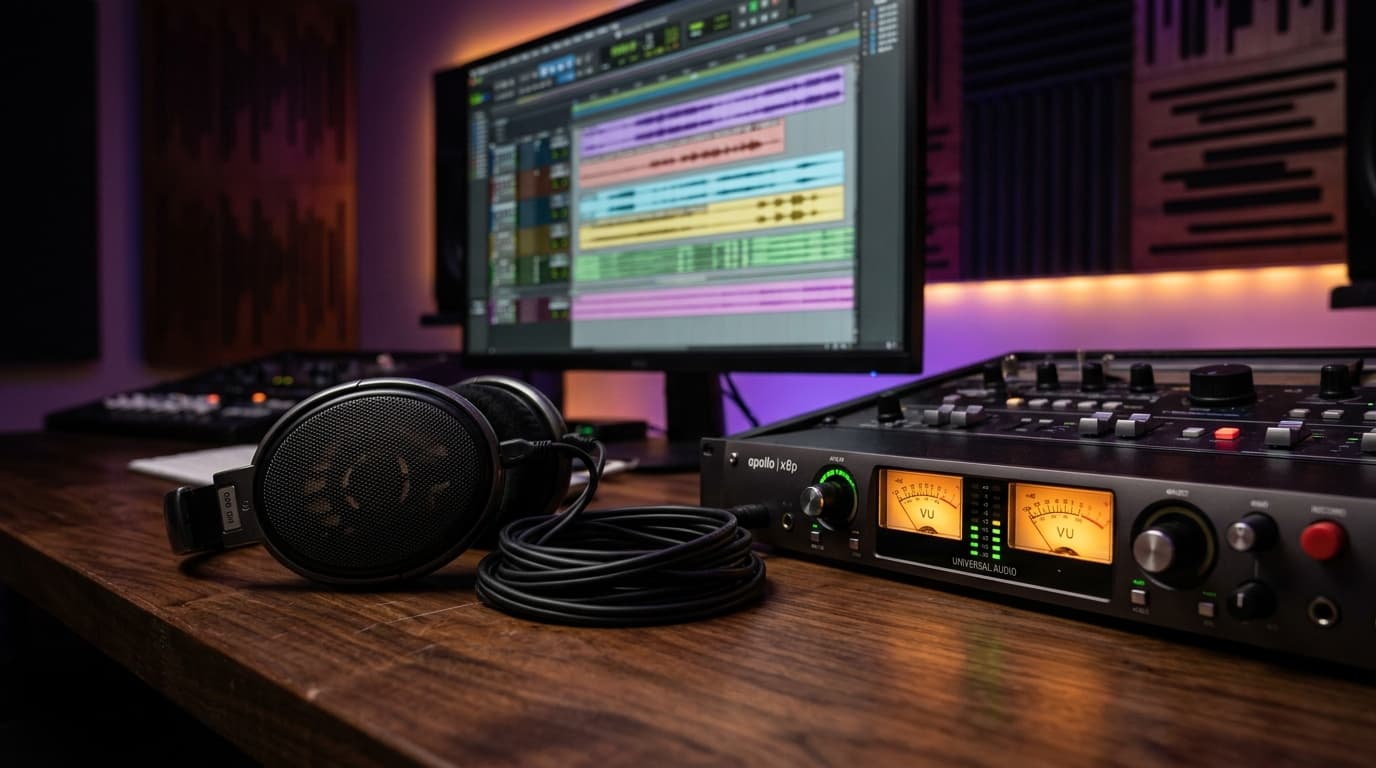
High-precision audio mixing, J-cut/L-cut waveform alignment, and Foley sound design for cinematic film editing.
3. The Modern Industry Software Stack: Premiere Pro vs DaVinci Resolve vs After Effects
A modern professional video editor rarely relies on a single software application. Industry workflows require seamless interoperability across three primary powerhouses:
Adobe Premiere Pro remains the gold standard in broadcast, ad agencies, and YouTube production pipelines for high-speed narrative cutting, multi-cam synchronization, and tight Adobe Creative Cloud integration. DaVinci Resolve Studio has captured the high-end post-production market with its unmatched node-based color science, Fairlight audio workstation, and advanced Fusion compositing. Adobe After Effects bridges the gap with kinetic typography, 3D camera tracking, lower thirds, and explosive motion graphics.
- Adobe Premiere Pro: Best for rapid storytelling, narrative structure, multi-cam, and agency commercials
- DaVinci Resolve Studio: Industry benchmark for cinematic color grading, ACES workflows, and Fairlight audio
- Adobe After Effects: Indispensable for kinetic typography, VFX compositing, title design, and motion reels
4. The Secret Weapon of Cinematic Impact: Color Science & Sound Design
Flat LOG and RAW footage captured on Sony FX3, Blackmagic, or RED cameras looks washed-out and grey directly out of camera. Transforming flat sensor data into rich, velvety contrast with accurate skin tones requires a deep understanding of vectorscopes, waveform monitors, and color grading science.
In tandem with color grading, professional sound design—layering subtle room tone, atmospheric ambiences, crisp Foley footsteps, sub-bass riser drops, and dynamic whoosh transitions—creates the tactile immersion that makes viewers forget they are looking at a glass screen.
5. Career Roadmap & Freelance Earning Potential in 2026
The commercial opportunities for skilled video editors have expanded far beyond traditional Bollywood and broadcast TV studios. Today, high-growth direct-to-consumer (D2C) brands, top YouTube creators, tech startups, and digital performance ad agencies in Delhi NCR, Mumbai, and Bengaluru are competing fiercely for editors who understand pacing, retention analytics, and conversion psychology.
In India, entry-level assistant editors start at ₹3.5 LPA to ₹5.5 LPA. Senior commercial editors and post-production leads with agency portfolios command ₹10 LPA to ₹25+ LPA. On global freelance platforms and direct international retainers, remote Indian editors frequently charge $1,500 to $4,500 per month editing content for US, UK, and Dubai clients.
- Assistant / Junior Video Editor: ₹3.5 LPA – ₹5.5 LPA (Agency & Studio Entry)
- Mid-Weight Commercial Editor: ₹6.0 LPA – ₹10.0 LPA (Campaigns, Ads & Social Retainers)
- Senior Post-Production Lead / Creative Director: ₹12.0 LPA – ₹25.0+ LPA
- International Remote Freelancer: $1,500 – $4,500/month (US & European Brand Retainers)
6. Agency-Style Video Editing Mentorship at Pixel Squad (Sector 7 Dwarka, Delhi)
At Pixel Squad, we don't teach video editing through generic software menus and dry theory. Students train directly under Creative Director Mohammed Shahid (14+ years of agency leadership heading creative accounts at Ogilvy, Dentsu, McCann, Cheil, and JWT).
Our students work with uncompressed 4K RAW camera footage, real commercial agency storyboards, multi-speaker podcast setups, and challenging visual briefs. Every student graduates with an industry-grade commercial showreel and receives 1-on-1 portfolio defense coaching backed by our 100% placement assistance network of 200+ agency hiring partners.
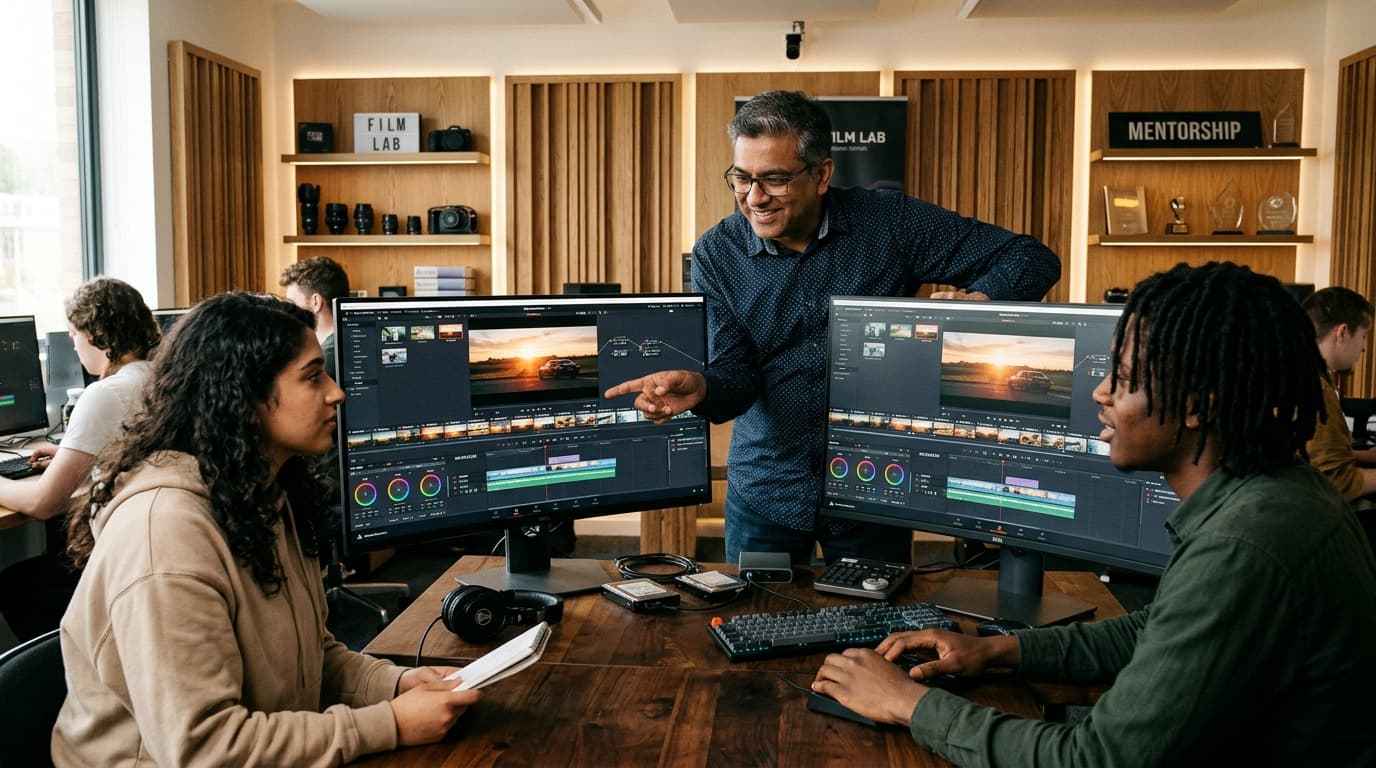
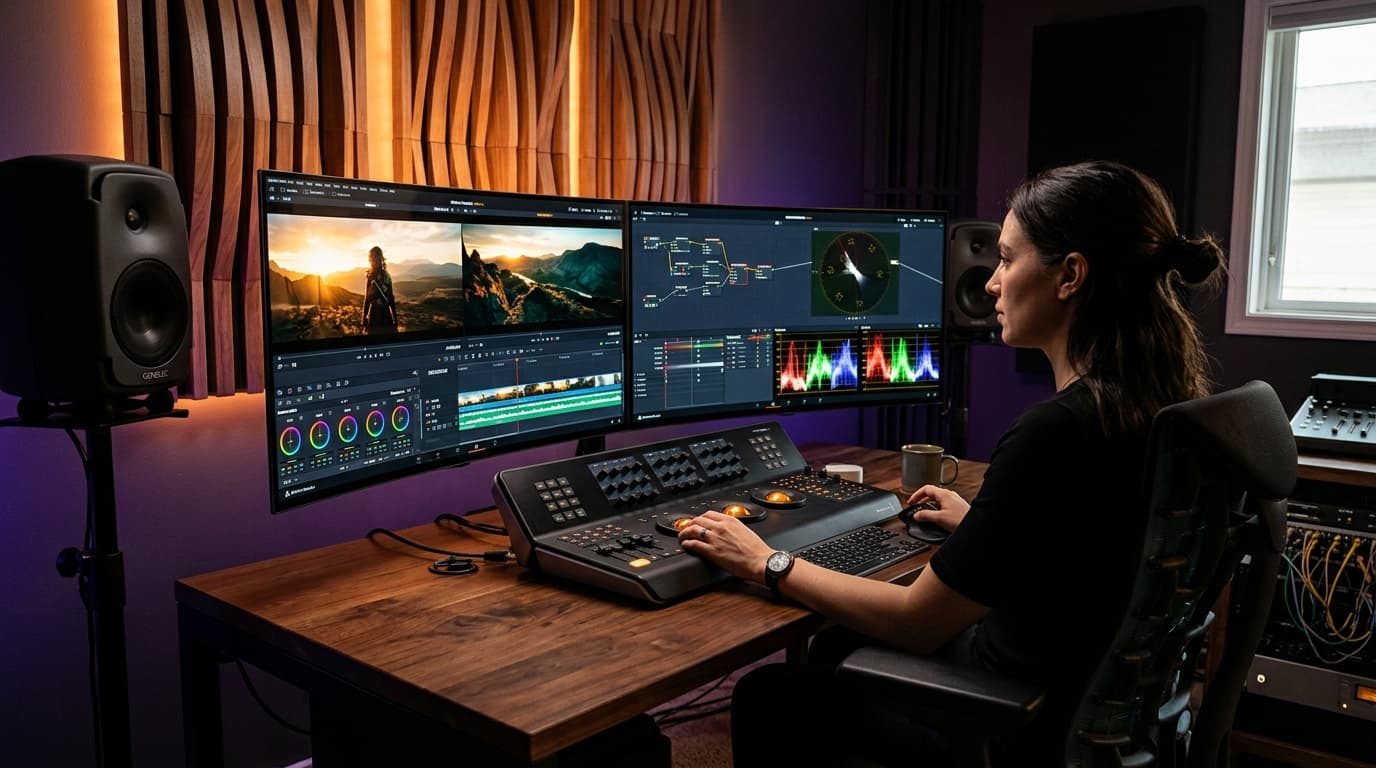
Hands-on practical training on high-performance dual-display editing workstations under Creative Director Mohammed Shahid at Pixel Squad Dwarka.
Key Takeaways & Mentorship Advice
Video editing is not simply a technical trade; it is the superpower of shaping how human beings feel, think, and decide. In an era where AI tools automate repetitive mechanical tasks, the editor who commands emotional storytelling, impeccable timing, and agency polish will always remain indispensable. Explore Pixel Squad's Motion Graphics & Video Editing Diploma or Advanced Multimedia Diploma in Dwarka to launch your professional editing career today.
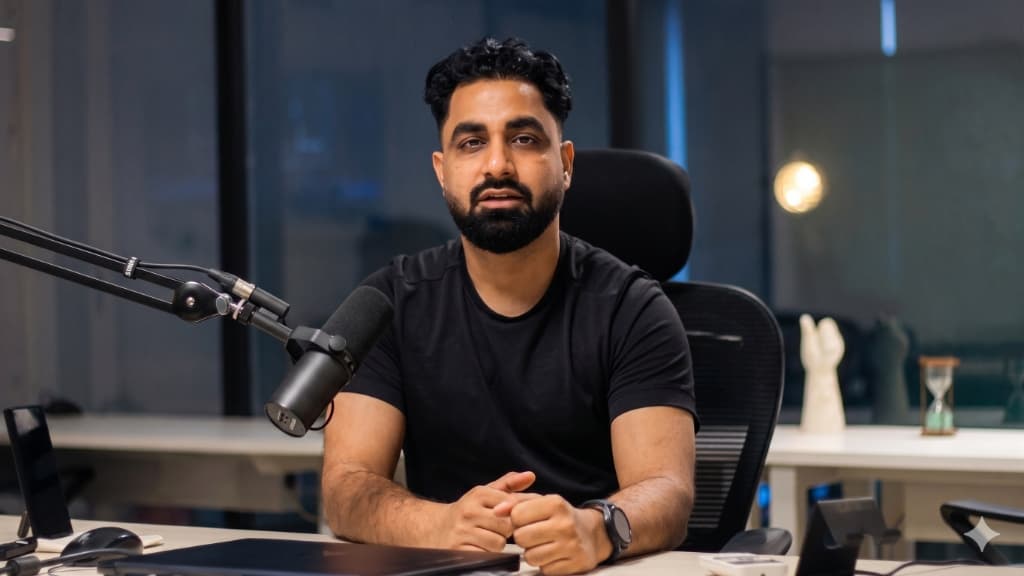
Mohammed Shahid
National Award WinnerFounder & Creative Director, Pixel Squad
Creative Director with 14+ years of agency leadership in branding, visual effects, and digital experience design. Directs masterclasses and personalized portfolio reviews at Pixel Squad Dwarka.